The Institute of Applied Computer Science at the Freyung Campus is dedicated to application-oriented research and development in close collaboration with businesses, other research institutions and public bodies at regional, national and international levels. Guided by the vision of a ‘Bavarian Forest Technology Region’, the Institute helps to translate technological innovations into practical applications and to strengthen the sustainable development of the East Bavarian border region.
This collaboration ranges from publicly funded research projects and contract research to scientific services. The institute supports partners in developing innovative project ideas, identifying funding opportunities, and drafting and submitting applications for research projects. Together, application-oriented research and development projects are designed and implemented, and their results are transferred to businesses and public institutions. The aim is to harness the opportunities of digital transformation for the economy and society and to strengthen the region’s capacity for innovation in the long term.
Core competencies
The academic focus is on cyber-physical systems and the digital economy.
In the field of cyber-physical systems, research and development projects are being carried out across a broad spectrum of applications, ranging from flood monitoring to the safe integration of drones into airspace. Typically, these projects address cross-cutting themes that bring together the institute’s various areas of work, such as communication systems, edge AI and sensor applications.
The Digital Economy division’s key areas of expertise lie in the application-oriented shaping of digital transformation, the transfer of knowledge and technology, and the promotion of regional innovation capacity. In collaboration with national and international partners, scientific findings are translated into practical solutions and made available, in particular, to structurally disadvantaged regions.
Research activities
Cyber-Physical Systems
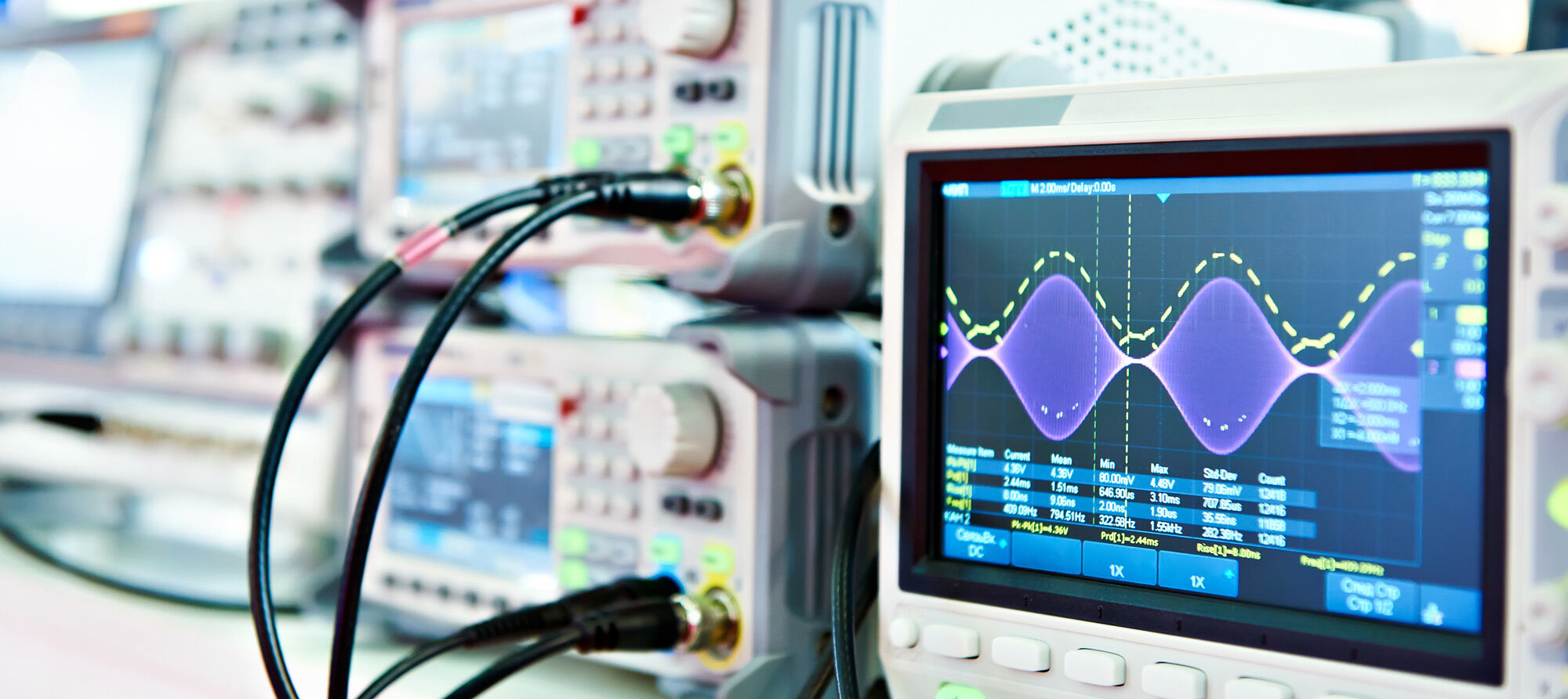
In the field of communication systems, the focus is on the development, testing and demonstration of modern radio and network technologies. A dedicated 5G campus network and high-quality measurement technology enable the development of innovative 5G applications using ground-based or drone-based communication components. LoRa and LoRaWAN are used in particular for setting up energy-efficient networks with long-range coverage for the transmission of sensor data. In addition, Software-Defined Radio (SDR) enables the flexible development and testing of a wide range of high-frequency and radio applications. This allows radio signals to be analysed and the data obtained to be processed using, amongst other things, artificial intelligence. The areas of application range from the testing of new communication systems to the analysis of radio signals.
Artificial intelligence and edge AI enable the intelligent analysis of data from sensor networks, cameras and software-defined radios. To this end, suitable AI models are developed, evaluated and optimised for various application scenarios. Particular emphasis is placed on processing data directly at the source: by specifically optimising the models for resource-constrained edge devices, data can be analysed on-site efficiently and with short response times.
In the field of sensor applications, sensor networks are developed and deployed for a wide range of applications, from Ambient Assisted Living to flood monitoring. This involves integrating suitable sensor technology, communication networks and data management into comprehensive solutions. The analysis of the sensor data collected takes place both on the server and directly at the edge, and can be supported by artificial intelligence techniques. A particular focus is on the implementation, optimisation and evaluation of suitable algorithms and models.
The development and testing of innovative drone applications is a key focus. Drones serve as flexible platforms for various camera systems, including hyperspectral, multispectral and thermal infrared cameras, as well as for sensors such as laser scanners and ground-based radar. They are also used as mobile communication platforms. Another focus is on the safe integration of drones into airspace, as well as on the detection of uncooperative drones through the analysis of communication signals, including the use of software-defined radio and edge AI.
Development of websites and Android apps using the latest frameworks or no-code/low-code approaches (e.g. Node-RED). The solutions developed may be standalone systems or form part of projects in other areas, such as prototype front-ends for various communication and sensor applications.
Digital economy
We support SMEs and public sector organisations in making targeted use of the opportunities offered by digital transformation. To this end, we offer bespoke consultancy on digital technologies and artificial intelligence, practical training and professional development programmes, as well as opportunities to trial new solutions in test environments, living labs and pilot demonstrators. In addition, we support the development of projects and advise on suitable funding opportunities.
The focus is on the sustainable development of rural areas through digital innovation. To this end, regional levels of digital maturity are analysed, data-driven strategies are developed, and networks between academia, business, public administration and civil society are strengthened. Particular emphasis is placed on Eastern Bavaria and the neighbouring regions in Austria and the Czech Republic. The aim is to strengthen regional innovation ecosystems in a sustainable manner and make them smarter and more resilient.
projects
publications
- Kunze, Stefan; Ulrich, Daniel; Dorner, Wolfgang (2026): Auf dem Weg zu einem praxistauglichen Radiofrequenz-Fingerprinting: Ein Überblick über Herausforderungen in der Praxis und Gegenmaßnahmen. IEEE Access 14, 132502–132538. DOI: 10.1109/ACCESS.2026.3726615
- Kunze, Stefan; Weinberger, Alexander; Dorner, Wolfgang (2026): Konzept für einen umfassenden Datensatz zum Radiofrequenz-Fingerprinting in der Praxis. 2026 IEEE International Mediterranean Conference on Communications and Networking (MeditCom), 1–6. DOI: 10.1109/MeditCom67211.2026.11641083
- Haselberger, Johannes; Pöschl, Rainer; Kunze, Stefan (2025): LoRaWAN-Knoten-zu-Knoten-Implementierung zur Sendezeitoptimierung und Fallback-Kommunikation. 2025 Sixteenth International Conference on Ubiquitous and Future Networks (ICUFN), 468–473. DOI: 10.1109/ICUFN65838.2025.11169941
- Luger, Marc; Seidel, A; Pähler, Ursula; Schröck, Sebastian; Hofmann, Peter; Kölbl, Sebastian; Drechsler, K (2025): Ein ontologiegestützter digitaler Zwilling für faserverstärkte Polymerstrukturen am Beispiel von Windkraftanlagen-Rotorblättern. Advanced Engineering Materials (Erstveröffentlichung: 15. Januar 2025), 1–19. DOI: 10.1002/adem.202401437
- Rothmeier, Tobias; Kunze, Stefan (2025): Auf dem Weg zu einer audiobasierten Notfalleerkennung für Anwendungen im Bereich des umgebungsunterstützten Wohnens. 2. Internationale IEEE-Konferenz 2025 zu Blockchain, Smart Healthcare und neuen Technologien (SmartBlock4Health), 1–5. DOI: 10.1109/SmartBlock4Health64843.2025.11189382
- Khan, Asad Saeed; Paudyal, Rajan; Dorner, Wolfgang; Baumann, T (2025): Bewertung kostengünstiger Sensoren zur Überwachung der Wasserqualität für das Internet der Dinge (IoT). 6. Internationale Konferenz für Kommunikations-, Informations-, Elektronik- und Energiesysteme (CIEES) 2025, 1–6. DOI: 10.1109/CIEES66347.2025.11300217
- Rödel, Siegfried (2024): Das Potenzial von 5G für kleine Unternehmen erschließen. Research Features Magazine 151, 102–105.
- Shatto, C.; Kiene, M.; Hofmann, Peter; Walentowitz, A.; Wilkens, V.; Heuser, T.; Weiser, F. (2024): Bewertung der Erholung von Pinus-canariensis-Beständen nach Waldbränden und einem Vulkanausbruch auf La Palma, Kanarische Inseln. „Forest Ecology and Management“ 572, 122317. DOI: 10.1016/j.foreco.2024.122317
- Saha, Bidyut; Kunze, Stefan; Pöschl, Rainer (2024): Vergleichende Studie zu Deep-Learning-Modellarchitekturen für die Erkennung und Klassifizierung von Drohnen. Tagungsband der 4. Internationalen Mittelmeer-Konferenz für Kommunikation und Netzwerke (IEEE MeditCom 2024). DOI: 10.1109/MeditCom61057.2024.10621214
Research groups
contact AND DIRECTIONS


Address:
Deggendorf University of Applied Sciences
Institute of Applied Computer Science – Freyung Campus
Grafenauer Str. 22
94078 Freyung
Tel: +49 (0)8551 91764-0
info.tc-freyung@th-deg.de